Why is my candle black inside?

Share
You've lit your candle, you're having a nice evening, everything's very cosy — and then you glance at the jar and there's a big black smudge creeping up the glass like your candle's been having a rough week. That's soot. It means something in the burn just went a bit wrong.
WHAT ACTUALLY IS SOOT?
Soot is unburnt carbon. When a candle burns "clean," the flame is fully combusting the wax and fragrance oil vapour — turning it into heat, light, water vapour and CO2, and basically nothing else. When the flame can't fully burn everything it's pulling up the wick, the leftover carbon particles float off as smoke and land on the nearest surface, which is usually your jar, your ceiling, or that white lampshade you now deeply regret buying.
So soot = incomplete combustion. It's not a mystery substance, it's just wax that didn't get the memo.
WHY DOES THE FLAME STOP BURNING CLEANLY?
A few usual suspects:
- Wick is too big for the candle. A fat flame pulls up more fuel than it can actually burn, so the extra goes up as soot. This is the number one culprit.
- Drafts. Sat your candle near a window, a fan, or a door that keeps swinging open? The flame flickers and dances instead of burning steady, and a dancing flame is a sooty flame.
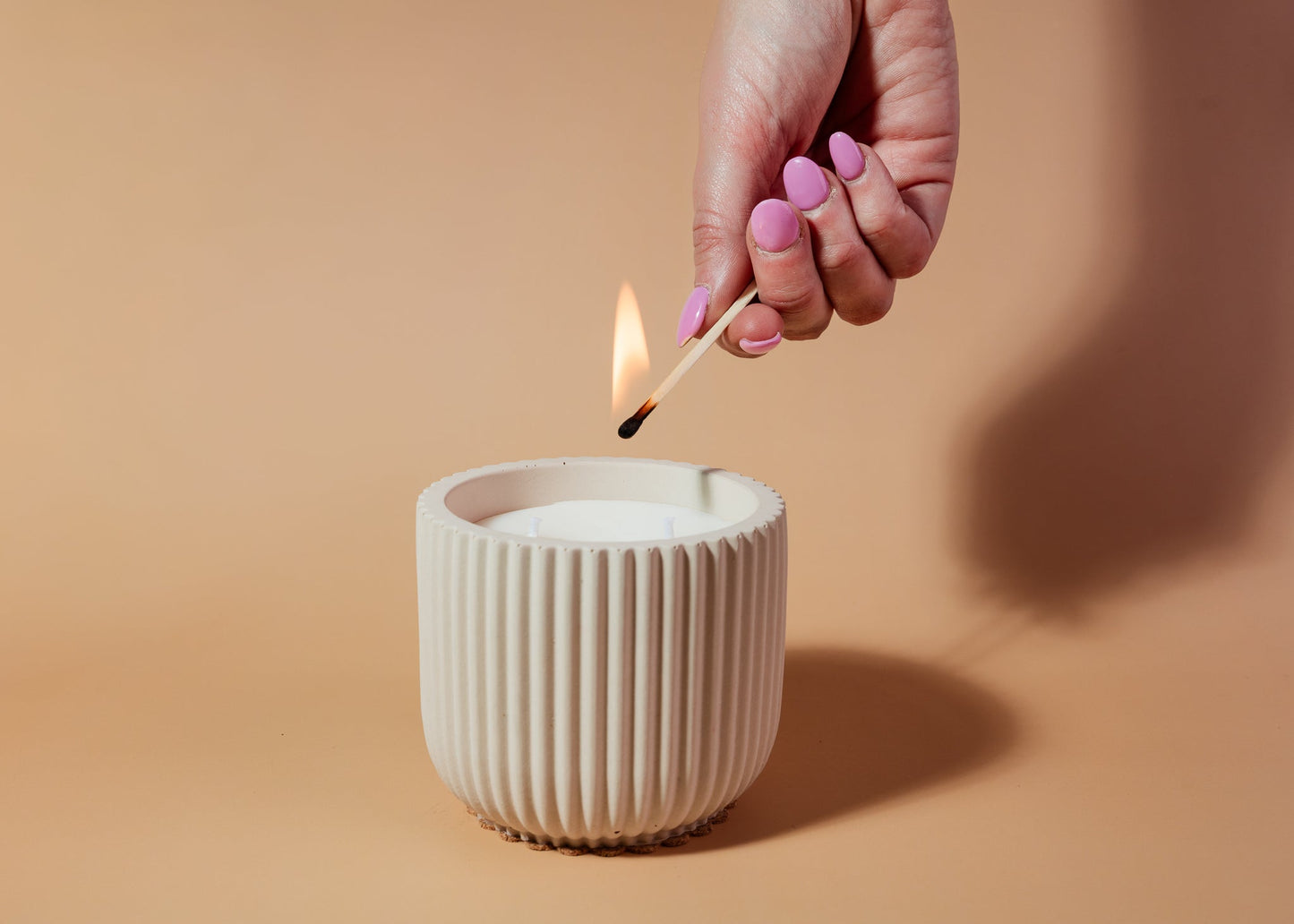
- Wick not trimmed. If you're not trimming to about 5mm before every light, the flame gets taller and messier over time. Curled, mushroomed wicks are basically begging to soot.
- Too much oil oil (especially the synthetic stuff) can throw off how cleanly the wax burns. More on that in a second.
- The wax itself. And here's the bit I actually want to talk about.
wax matters more than people think...
Not all wax burns the same, and this is genuinely one of the reasons I only work with soy wax.
Paraffin wax is a petroleum by-product — it's cheap, it's everywhere, and it's much more prone to sooting because of how it combusts. It burns hotter and less predictably, and it's more likely to leave you with that black halo creeping up your jar. It's also just... wax made from oil, which was never going to be my vibe.
Soy wax is a vegetable-based wax that burns cooler and cleaner. Lower, steadier flame = far less unburnt carbon floating about = a jar that stays looking new for way longer. It's not magic, it's just chemistry that's kinder to your candle.
This is also exactly why I scent with essential oils — synthetic paraben-laden toxic fragrance oils are often loaded with heavier compounds that can gunk up a burn, whereas essential oils sit more happily in a clean-burning wax without overwhelming it.
Soot = unburnt carbon from an inefficient flame. You can dodge most of it with wick trims and keeping your candle out of a breeze. But a huge chunk of the battle is won before you even strike the match — it's decided by the wax. Soy wax burns cleaner from the start, which is why every candle I make starts there.
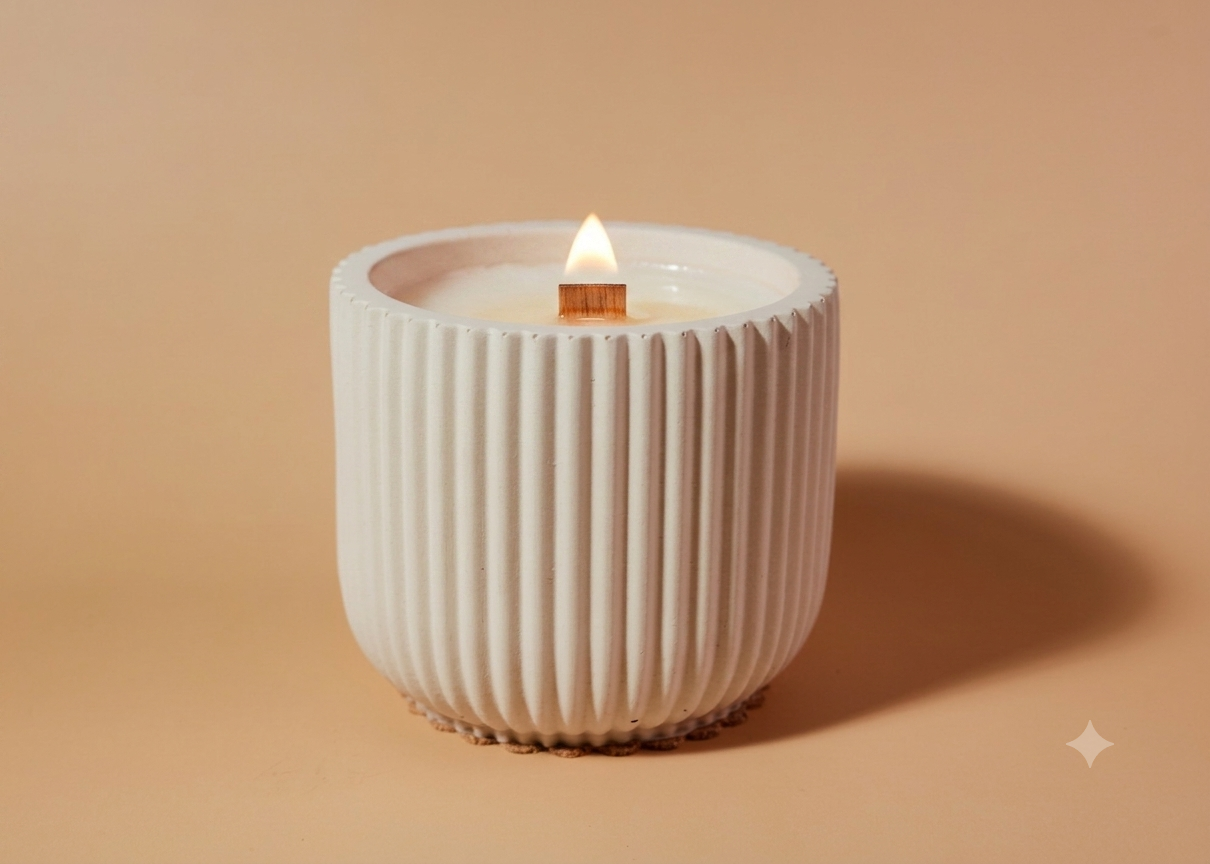
Check out candles that burn perfectly with a wooden wick, soy wax and essential oils here.
Basically: trim your wick, mind the drafts, and pick your wax like it matters. Because it does.